

- Resources
- Ingredient library
- Tongkat Ali Extract Quality: How to Verify Eurycoma Longifolia Dosage and Avoid Fake Ratios
Tongkat Ali Extract Quality: How to Verify Eurycoma Longifolia Dosage and Avoid Fake Ratios
The 100:1 extract ratio is often completely fabricated.
That may sound blunt, but the tongkat market has earned the warning. Shoppers find bottles that claim 100:1, 200:1, or higher. The label looks strong.
The serving looks huge. Yet the product may say almost nothing about the root, the extract, the active markers, the test report, or the real Eurycoma longifolia dosage.
That matters because tongkat ali works only when the plant, the part used, the dose, and the testing all line up. A fake ratio can turn a serious ingredient into dust in a capsule.
What Tongkat Ali is and How it Works
Tongkat ali is the common name for Eurycoma longifolia, also called longjack. The plant grows in Southeast Asia, and people have used the root for energy, male wellness, libido, and hard physical work.
Modern supplement brands use tongkat ali mostly for testosterone support. It is not testosterone. It is not a steroid. It does not replace medical care for diagnosed low testosterone.
A good extract may help the body support its own hormone balance, mainly in men who sit on the lower end of normal or feel worn down from poor sleep, stress, hard training, or age.
The root contains quassinoids such as eurycomanone, plus glycosaponins, polysaccharides, alkaloids, and peptides.
No brand should act like one compound explains the whole plant. Still, these markers help buyers see whether a product contains a real extract or cheap powder with a loud label.
The main path likely relates to stress and hormone balance. Cortisol and testosterone can move against each other during stress, poor recovery, and heavy training blocks.
A well-made tongkat extract may support a healthier cortisol pattern, which can make testosterone status look better in some people.
That does not mean every healthy young lifter will see a large jump. Tongkat ali cannot outwork four hours of sleep, low calories, heavy drinking, or a poor training plan. The extract supports the system. It does not fix the whole system alone.

Why a 100:1 Tongkat Ali Label Can Be a Red Flag
A real extract ratio should tell you how much starting plant material went into a final amount of extract. A true 10:1 extract means ten parts raw plant became one part extract after water, fiber, and other material left during processing.
So a 100:1 claim should mean 100 parts root became one part extract. That sounds strong. It also raises a fair question: where did all the weight go, and what compounds remain?
Many weak labels use ratios like a sales trick. They place “100:1” on the front, then skip the details that would make the claim useful. They may not state the plant part. They may not say root.
They may not list the extract solvent. They may not show eurycomanone, glycosaponins, or other marker levels. They may use filler, maltodextrin, rice flour, or other carriers while letting the ratio do the selling.
A Longjack root extract ratio does not prove purity. It does not prove strength. It does not prove that the product matches a human study. It only describes a manufacturing yield when the brand gives the full context.
A shopper may see 500 mg of a “100:1” tongkat extract and think it equals 50,000 mg of root. That may look better than a 200 mg studied extract. But a studied 200 mg extract with marker testing can beat a mystery 500 mg extract every time.
You should distrust any ratio that stands alone. Ask for the math behind it. Ask for the plant part. Ask for the active markers. Ask for the certificate of analysis for the batch you bought. If the brand cannot show those items, the ratio has no real value for you.
The Doses Behind Tongkat Ali Research
The human data does not point to wild 100:1 labels. It points to moderate daily doses of defined root extracts used for weeks, not days.
One tongkat ali testosterone study gave stressed adults 200 mg per day for four weeks. The group taking tongkat had lower salivary cortisol and higher salivary testosterone compared with placebo. The same trial reported better mood scores tied to tension, anger, and confusion.
A 2021 trial used a standardized aqueous root extract in men aged 50 to 70 with total testosterone below 300 ng/dL.
The study tested 100 mg and 200 mg per day for 12 weeks. The 200 mg dose raised total testosterone compared with placebo at weeks 4, 8, and 12.
The study did not find a clear between-group rise in free testosterone, which gives us a more careful view. Total testosterone may rise, but free testosterone may not move in the same way.
A sports safety study used 400 mg per day for six weeks in male recreational athletes. The extract did not change the testosterone to epitestosterone ratio, the marker used in doping checks. The study also found no harmful changes in liver or kidney tests during that short period.
A 2022 review looked across clinical trials and found support for tongkat ali raising total testosterone in men, with stronger signals in men with low testosterone. The review also shows why quality matters.
Different studies used different extracts, doses, groups, and time frames. Do not compare a tested extract with a random marketplace powder and expect the same outcome.
A fair eurycoma longifolia dosage range from human work sits around 100 to 400 mg per day for standardized extracts.
Many people start near 100 to 200 mg per day, then judge sleep, mood, digestion, libido, and lab work over several weeks. More is not always better. High-dose products may bring more risk without better proof.
Does Tongkat Ali Work for Testosterone Support?
Yes, tongkat ali may increase total testosterone in some men, mainly men with low or low-normal levels, older men, or stressed adults. Studies used about 100 to 400 mg per day of defined root extracts for four to twelve weeks. It does not work like testosterone therapy, and product quality changes the result.

What to Check Before Buying Tongkat Ali
Start with the plant name. The label should say Eurycoma longifolia, not just a vague “male blend” name. Then check the plant part. You want root extract, not leaf, stem, bark, or an unnamed plant blend.
Next, look for the actual dose per serving. A strong label tells you the milligrams of tongkat ali extract per serving. It should not hide the amount inside a proprietary blend. If the product stacks tongkat with other compounds, each ingredient should still show its own dose.
Then check standardization. Good tongkat ali extract quality depends on markers. The label or test report may list eurycomanone, glycosaponins, polysaccharides, or peptides.
A studied extract may show eurycomanone near 0.8 to 1.5%, with glycosaponins and polysaccharides listed too. Other extracts may use other standards, but the brand should explain them.
Ask for a batch-specific certificate of analysis. A real report should match the lot number on the bottle. It should test identity, strength, heavy metals, microbes, and common contaminants.

Athletes should give extra weight to sport testing because contaminated products can put a season, contract, or record at risk.
Be careful with labels that shout only about a ratio. “200:1” with no marker data tells you less than “200 mg root extract standardized to known markers.” The best tongkat ali supplement is not the one with the biggest ratio. It is the one with a clear dose, clear plant part, clear testing, and a brand willing to answer hard questions.
How Tongkat Ali Fits Into a Testosterone Support Stack
Tongkat ali appears in testosterone support formulas because it pairs well with recovery and hormone-support nutrients. A smart stack does not throw every loud ingredient into one bottle. It uses compounds that cover different weak points.
Zinc makes sense for men who do not get enough from food, because zinc status links closely with normal testosterone production. Magnesium supports sleep quality, muscle function, and recovery. Ashwagandha may help people who carry stress hard, which can pair well with tongkat if recovery sits at the center of the plan. Black pepper extract can help absorption in some formulas, though it can also affect medication handling, so people on prescriptions should ask a clinician first.
DIM and nettle show up in post-cycle and hormone balance products. They fit a different role than tongkat. Tongkat mainly sits in the testosterone support lane.
DIM sits more in the estrogen metabolism lane. Nettle may support general wellness and minerals. The stack should match the goal.
Be more careful with Fadogia agrestis. Many testosterone blends use it, but human data sits far behind the marketing. If you choose a product with Fadogia, care even more about dose, brand testing, and how your body responds.

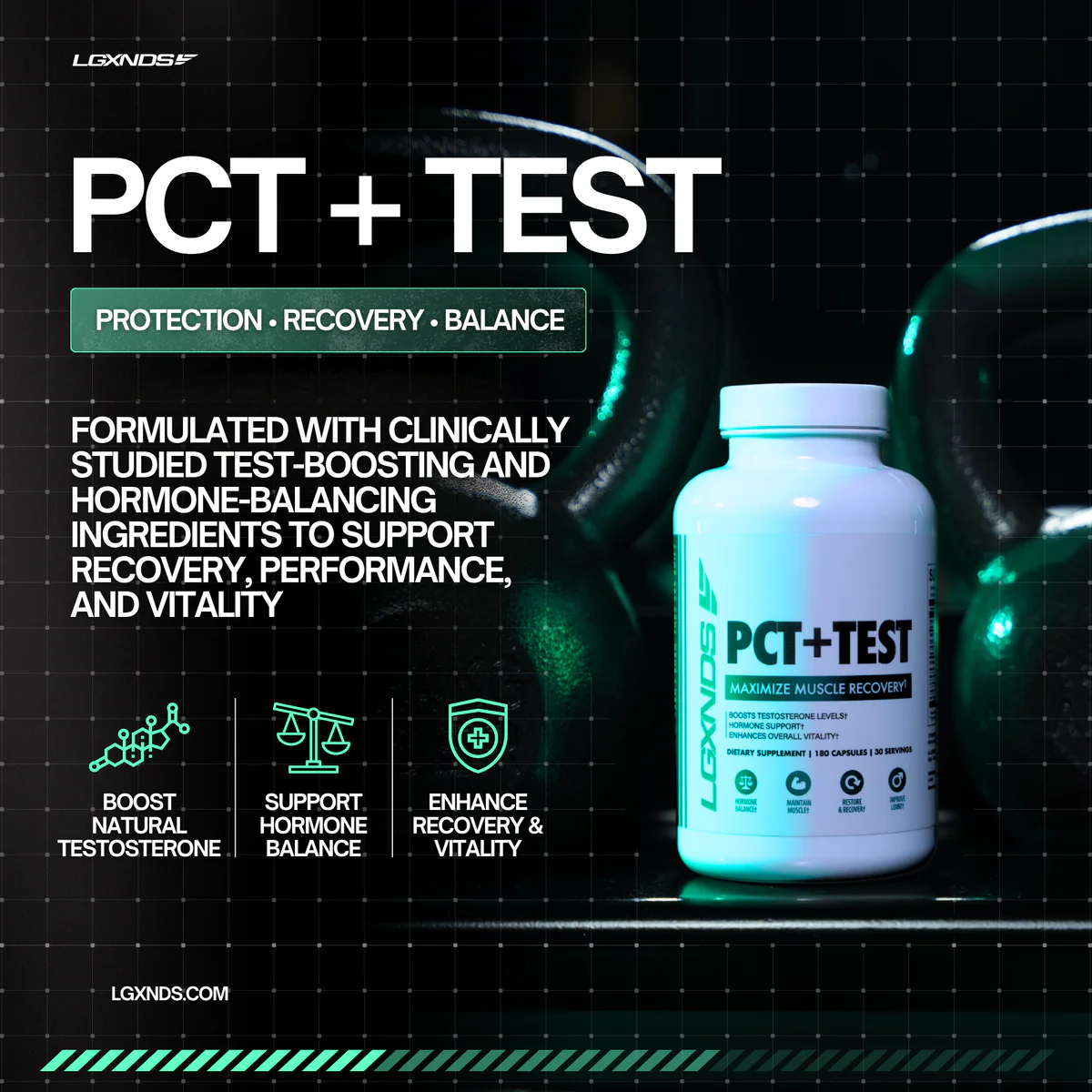
LGXNDS PCT+TEST includes Longjack (Tongkat Ali) in a broader hormone-support stack with KSM-66 Ashwagandha, BioPerine, zinc, magnesium, and post-cycle support ingredients.
That type of product makes sense for lifters who want one formula for testosterone support, stress support, and hormone balance rather than a loose pile of single bottles.
Conclusion
If you want a cleaner way to shop for testosterone support, start with the label and the testing, not the hype.
Explore LGXNDS PCT+TEST for a formula that includes Longjack (Tongkat Ali) inside a broader hormone-support stack.
Smart buyers do not chase the biggest ratio. They choose the product that shows the dose, the testing, the plant part, and the reason each ingredient belongs in the stack.
FAQs
What is a good eurycoma longifolia dosage?
Human studies use 100 to 400 mg per day of a defined tongkat ali root extract for four to twelve weeks. The right dose depends on extract quality, marker testing, health status, and goals.
Does a 100:1 tongkat ali extract mean it is stronger?
Not by itself. A ratio only describes plant input to extract yield when the brand gives the full details. It does not prove purity, active marker content, or a match to clinical study material.
What marker should I check in tongkat ali?
Look for eurycomanone plus broader marker data such as glycosaponins, polysaccharides, or peptides. A batch report should confirm identity, strength, heavy metals, microbes, and contaminants.
Can tongkat ali replace testosterone therapy?
No. Tongkat ali is a supplement that may support normal testosterone status in some men. It does not replace medical care for diagnosed low testosterone.
FAQs
 Recommended for this topicRecovery & Reset Pack - Cycle Defender & PCT + TestCycle stack for hormone balance & recovery.$115.00