

- Resources
- Blog
- Energy & Pre-Workout
- Pre Workout Supplements Natural
Pre Workout Supplements Natural
Pre workout supplements natural, best pre workout supplement, best pre workout supplements for females
most potent pre workout supplement, non stimulant pre workout supplement, pre workout supplements energy, best pre workout supplement for females


How to Boost Workout Energy and Performance Naturally (Complete Pre-Workout Guide)
For people who struggle with low energy during workouts, a stronger supplement looks like a solution. The whole time, they’re dealing with poor sleep, low-carb intake, dehydration, accumulated fatigue, and an overreliance on caffeine. This is important because the best pre-workout strategy isn’t always taking more, but understanding what gives you energy to train. This means getting enough nutrients through your diet, drinking enough fluids, and training properly, which makes a foundation for exercise performance. Then, take supplements to bridge the gap.
Our guide discusses how to keep pre workout supplements natural, choosing the best pre workout supplement, and the best pre workout supplements for females vs males.
What Creates Workout Energy
Having ‘energy’ in the gym is a combination of mental alertness, hydration, nutrition, and fast recovery. If any of these are off, your workout can feel flat, even if your motivation is running high. It’s why two people can take the same pre-workout but have completely different sessions: your supplement is just an addition to a larger system.
Having energy for a productive workout depends on five things: enough sleep, being hydrated, eating enough carbs to fuel your session, ensuring quality nutrition, and training at a pace that matches your recovery. When these are in place, a supplement can sharpen your performance.
Sleep is Your First Real Pre-Workout
If you’re low on energy in the gym, the first question you should be asking is ‘how did I sleep this week?’ instead of ‘what’s the strongest pre workout supplement?’
Sleep is a Performance multiplier because it impacts your body and brain. The Centers for Disease Control and Prevention (CDC) emphasises that getting enough sleep improves attention and memory, while the National Sleep Foundation reports that sleep deficiency can interfere with your ability to learn, focus, and react. When you’re training, getting enough sleep helps you move better, improves your pacing, and makes you willing to push through workouts. When you get a full 7 to 9 hours, it strengthens your decision-making and even impacts how useful stimulants feel. So if you sleep badly and need caffeine to power you through a session, you may get a temporary boost of alertness, but recover poorly afterwards. The CDC advises that you should avoid having caffeine in the evening for better sleep hygiene. This is important because a pre-workout that helps tonight may make tomorrow’s session worse.
Hydration Keeps Fatigue Away
Staying hydrated improves your performance because water plays an important role in so many functions affecting your workout. It regulates your temperature, circulation, joint function, and even waste removal.
According to the CDC, water intake maintains a normal temperature and prevents dehydration-related problems like brain fog and overheating. This means you’ll feel more energetic while training, concentrate well, and avoid that sluggish, drained feeling that happens midway through a session.
Hydration support is about taking electrolyte supplements to help your body optimise its water intake, and it works even better when you take Carbohydrates and sodium appropriately. The United States Anti-Doping Agency (USADA) sports nutrition guide explains that sodium can maintain or restore blood volume and help with water retention.
Meanwhile, sports drinks with Carbohydrates can keep blood glucose levels steady, improving your exercise capacity during longer or intense training sessions. It also mentions how a 6 to 8% carbohydrate sports drink with sodium can empty from the stomach as fast as plain water, while giving the body useful energy and hydration support.
How Hydration Boosts Pre-Workout Energy
Instead of stimulating you the way a caffeine-based supplement would, hydration support improves the physical conditions that make performance possible. Specifically, blood volume, thermoregulation, fluid balance, and even glucose delivery. For many people, especially those living in hot climates or completing high-sweat sessions, electrolyte products like LGXNDS EAA + AMINOS are an effective form of pre workout supplements energy support.
However, you need to take hydration products at the right time for them to be effective. The USADA suggests that you shouldn’t wait until right before you exercise to hydrate. You should take about 14 to 18 ounces of fluid every 2 to 4 hours before your workout, then another 8 to 12 ounces in the hour before. After that, you can take small amounts of fluid during longer sessions. This advice is crucial because starting the workout hydrated is very different from trying to catch up at the last minute.
Your Body Needs Carbohydrates
When your goal is to increase workout energy naturally, carbohydrates are the answer. Heaps of evidence prove that carbohydrate intake provides immediate fuel for muscles and helps preserve existing glycogen stores. This effect is important because glucose is the preferred energy form for muscle cells, and performance worsens noticeably when glycogen (a form of glucose that’s stored in the body) runs low, especially in moderate to high-intensity sessions.
That’s why a smart pre-workout snack, like toast, cereal, fruit, or a banana, can sometimes outperform a stronger supplement. A light carbohydrate-based snack before training can improve your workout quality just by supplying usable fuel. This benefit is even clearer for longer training sessions or back-to-back training. Plenty of research on sports-nutrition guidance shows that carbohydrate intake before or during longer exercise sessions can maintain performance better than training on low fuel.
Protein Works Indirectly, But Is Still Important
Most people don’t categorize protein as an ‘energy’ ingredient the same way as caffeine or carbohydrates, but it still matters for performance. Protein intake supports recovery, muscle repair, and overall training. According to the National Institute of Health’s (NIH) performance fact sheet, athletes need enough protein through their diet to make a solid foundation. This means supplements like the LGXNDS PREMIUM WHEY ISOLATE PROTEIN powder are only effective when added to that foundation instead of replacing it.
Protein won’t give you that immediate kick right before a workout, but a consistent intake supports your body’s ability to recover and feel stronger in future sessions. Eating enough protein gives you long-term performance support compared to an immediate pre-workout boost.
Pre-Workout Supplements: What They Do
Pre-workout is a category instead of a single type of product, so some are formulated for stimulation and focus, while others enhance pump and blood flow. You can divide them further based on stimulant and non-stimulant workout supplements. Since there are so many, asking for the best pre-workout supplement without defining your goal is incomplete.
The right pre-workout formula for early morning training will differ from when you train in the evening. At 6 in the morning, you want to feel alert and focused, while evening sessions demand endurance without sacrificing your sleep. But as long as you take the right pre-workout, there’s evidence that it will bring significant improvements in your performance.
Caffeine Works But Also Backfires
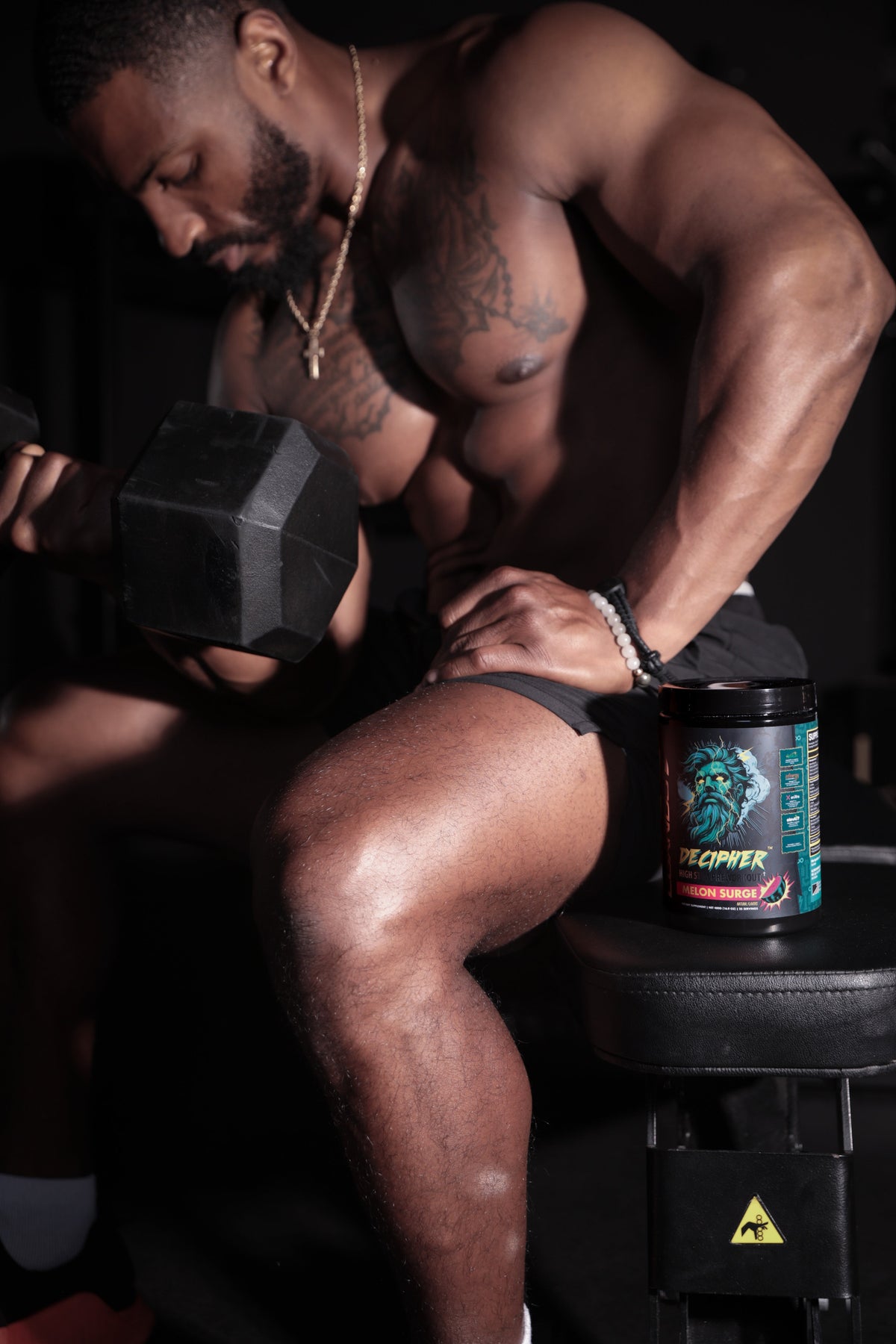
Caffeine is one of the most commonly used, evidence-backed performance ingredients in pre-workout supplements. Research shows that caffeine blocks adenosine receptors, which enhances arousal, increases energy, and reduces fatigue. Caffeine supplements, like the LGXNDS DECIPHER PREWORKOUT, also reduce perceived pain and exertion, which is one of the reasons intense training sessions can feel more manageable after using it.
The NIH’s sports performance fact sheet mentions that caffeine doses of 2 to 6 mg per kilogram of body weight before exercise can improve endurance, strength, and power in many settings. However, taking more doesn’t necessarily improve performance further, but does raise the risk of side effects.
Caffeine backfires when the dosage is too high, especially when you layer it on top of coffee or energy drinks, or when it disrupts sleep. The NIH explains that heavy caffeine use of around 500 mg or more per day can disrupt sleep and cause irritability and anxiety, along with insomnia, restlessness, nausea, and tachycardia in some people.
This is where product guidance for women should be science-based. The American College of Sports Medicine (ACSM) notes that females, smaller individuals, and caffeine-sensitive users are at a higher risk of complications from high-caffeine energy products. That’s why the best pre-workout supplements for females aren’t necessarily ‘female-branded’ formulas, but products that match body size, tolerance, training time, and desired effect.
Creatine Is a Major Performance Tool
Creatine isn’t a classic pre-workout stimulant, but it is one of the most researched sports supplements. The NIH explains how creatine helps generate ATP, an essential form of energy used for short, intense workouts, and it can support muscle performance by accelerating ATP-related energy supply.
This is important because people may confuse feeling energized with performing better. Creatine supplements, like LGXNDS CREATINE MONOHYDRATE, don’t create a stimulant buzz. Over time, they support better strength, repeated-effort performance, and training quality. That’s why it belongs in a smart performance stack, even if it isn’t the ingredient that gives you a physical boost.
Beta-Alanine and Citrulline
Beta-alanine works differently compared to caffeine because it helps the body tolerate acid-base stress that builds up during high-intensity workouts. This is why supplements containing beta-alanine, like LGXNDS DECIPHER PREWORKOUT, are effective for repeated high-intensity sessions.
It’s important to remember that beta-alanine is a chronic support ingredient rather than an instant energy booster. This means it usually works through repeated use over time, and not because you took one scoop 20 minutes before your workout.
Pre-workouts often contain citrulline because it may raise nitric oxide availability and support blood vessel dilation. The NIH notes that citrulline is more efficient in raising blood arginine levels than arginine itself, which is why pump-focused formulas use it as well.
When To Use Non-Stim Pre Workout Supplements
Non stimulant pre workout supplements are a smart choice for evening training, caffeine-sensitive users, or anyone who gets enough caffeine from their coffee breaks throughout the day. Despite not having caffeine, they improve session quality by increasing hydration and providing pump support, challenging the idea that the most potent pre workout supplement is always the best option.
Stronger stimulant impact can feel impressive, but it also increases the risk of side effects and worsens your sleep. As we mentioned earlier, high-caffeine energy products are risky for people with low tolerance and cardiovascular health issues.
Common Pre-Workout Mistakes
A common mistake people make is to use a pre-workout supplement to solve a sleep problem. The second is when they take the supplement on top of coffee, energy drinks, and poor hydration. The third is when they think that the tingling sensation equals effectiveness, but it’s not necessarily true.
Another major mistake is to take products with proprietary blends containing multiple ingredients that don’t mention specific amounts. According to the NIH, many performance supplements contain multiple ingredients that haven’t been tested in combination and don’t disclose the amount of each ingredient.
Lastly: judging a pre-workout by how hard it hits, because this mindse favors flash over function. A better question to ask is whether the formula actually helps you train better without disrupting your sleep, causing stomach issues, or increasing anxiety.
Final Preworkout Takeaway: A Simple Framework
You can increase energy naturally during workouts by improving the inputs that create energy: sleep, hydration, carbohydrates, and recovery. These things aren’t basic compared to pre workout supplements; they’re the reason they work in the first place.
From there, supplements like caffeine can improve alertness and reduce fatigue, creatine can support repeated high-intensity performance with time, and beta-alanine can support high-effort training with consistent use. And for many people, specifically evening lifters and caffeine-sensitive users, non stimulant pre workout supplements are a practical choice.
FAQs
What is the best pre-workout supplement I should take?
Your answer depends on whether you need energy, pump, focus, endurance, or non-stim support.
Do non-stimulant pre workout supplements work?
Yes, and they’re especially useful for evening training, people with caffeine sensitivity, or those who need pump-focused support.
Do pre workout supplements increase energy?
Pre workout supplements energy effects come from caffeine, hydration support, and your body’s fuel status before a workout.
FAQs
 Recommended for this topicDecipher PreworkoutHigh-stim pre-workout for energy, focus & endurance.$65.00Shop now
More on Energy & Pre-Workout
 Energy & Pre-WorkoutHow to Increase Strength and Endurance During Workouts?Learn the best strategies and natural pre-workout supplements to enhance your performance, whether you’re lifting weights or doing cardio.
 Energy & Pre-WorkoutHow to Build a Daily Supplement Routine for Better Health, Energy, and BalanceWant to start taking supplements for health and wellness? Here’s how to create a routine with the best supplements for health, energy, and balance
 Energy & Pre-WorkoutHow to Boost Workout Energy and Performance Naturally (Complete Pre-Workout Guide)From sleep and hydration to caffeine and creatinine, we’ll explain how to keep pre workout supplements natural and make the most out of training.